
This page outlines how I work once a problem is defined—how I collaborate, make decisions, and drive projects forward within real-world constraints.
My approach is informed by professional media experience and graduate study in innovation, content strategy, systems thinking, and UX/UI design.
When I’m Working
I clarify the problem early
Before solutions, I focus on alignment—what actually needs to be solved, for whom, and under what constraints.
I communicate decisions, not just direction
I explain why choices are being made so teams can move confidently without constant hand-holding.
I stay steady under pressure
Experience in fast-turn environments means I’m comfortable when timelines shift, information evolves, or priorities change.
I adapt to the team and context
I adjust how I work based on the environment—newsroom, live production, digital team, or classroom—without losing clarity or momentum.
Applied Coursework
-
Innovation & Systems Thinking
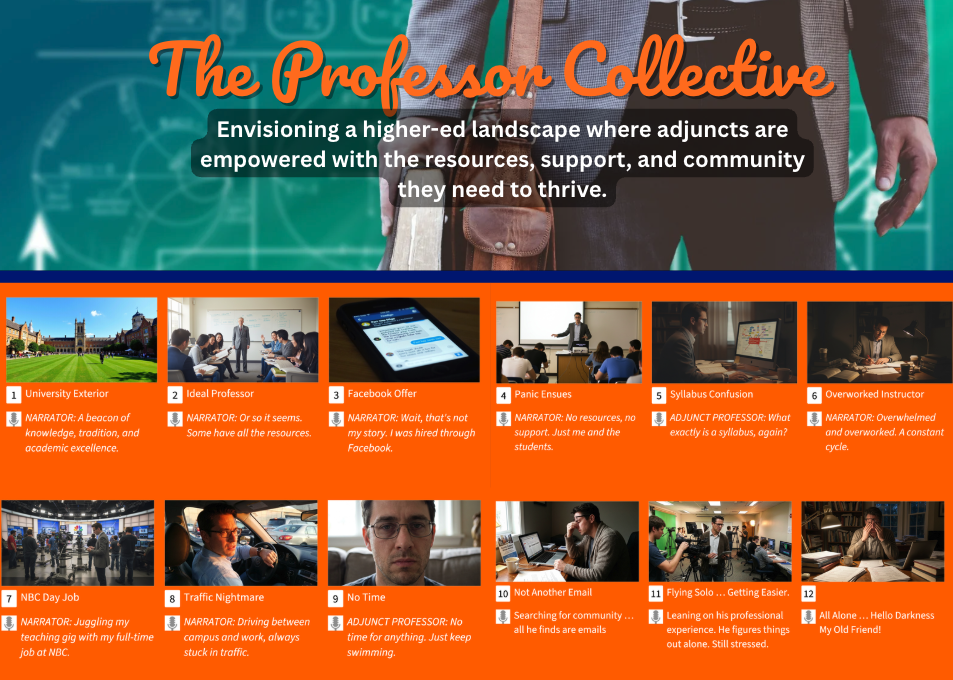
This project demonstrates an innovation- and systems-led approach to addressing a fragmented, underserved ecosystem in higher education. Grounded in primary and secondary research, including national data and qualitative insights from adjunct communities, the work identifies structural gaps in onboarding, support, and professional identity that impact both educators and institutions.
Using systems thinking, the project reframes adjunct support not as isolated resources, but as an interconnected content, community, and platform ecosystem. The Vision Poster articulates a future state in which narrative storytelling, microlearning, and peer connection function together as a scalable system—designed for time-constrained users and adaptable across institutions. Rather than proposing policy change, the concept prioritizes practical, human-centered interventions that can evolve over time.
This approach works in the real world because it’s designed for scale, constraint, and change—not ideal conditions.
-
User Experience & Content Design
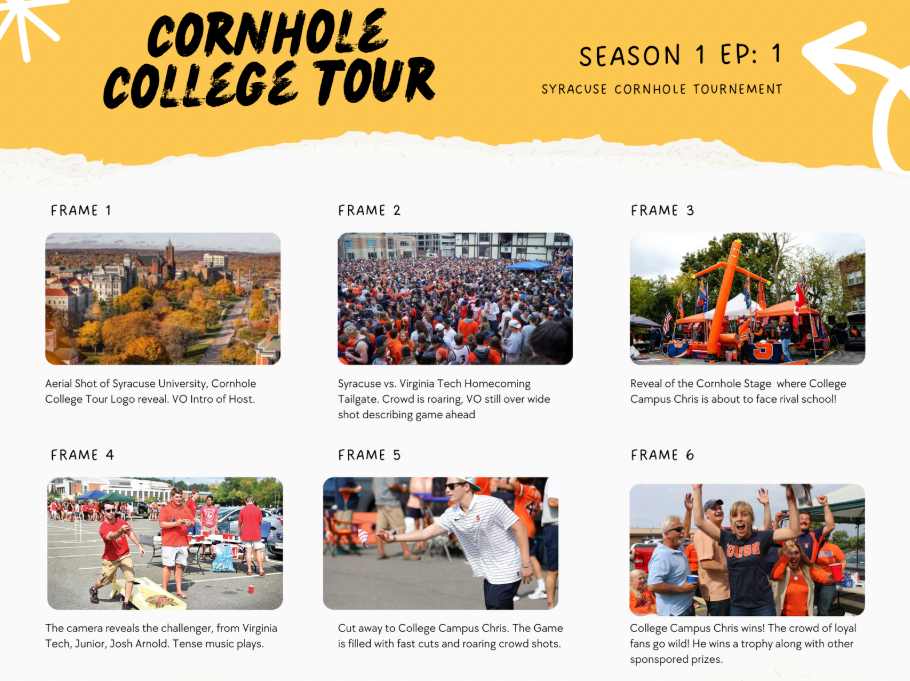
This project demonstrates a user-centered approach to content design by translating audience research and insights into an omnichannel content strategy for a niche community, World of Cornhole. Developed through a UX lens, the work explores how clearly defined personas can shape value propositions, content formats, and distribution decisions across platforms.
The strategy considers how different audience segments discover, engage with, and return to content, using those behaviors to inform structure, tone, and cadence. Content is treated not only as a communication tool, but as a product in itself—designed to be tested, refined, and iterated based on feedback and engagement signals.
This approach works in practice because it treats content as something people use—shaped by behavior, context, and feedback—not just something they consume.
-
Digital & Social Strategy
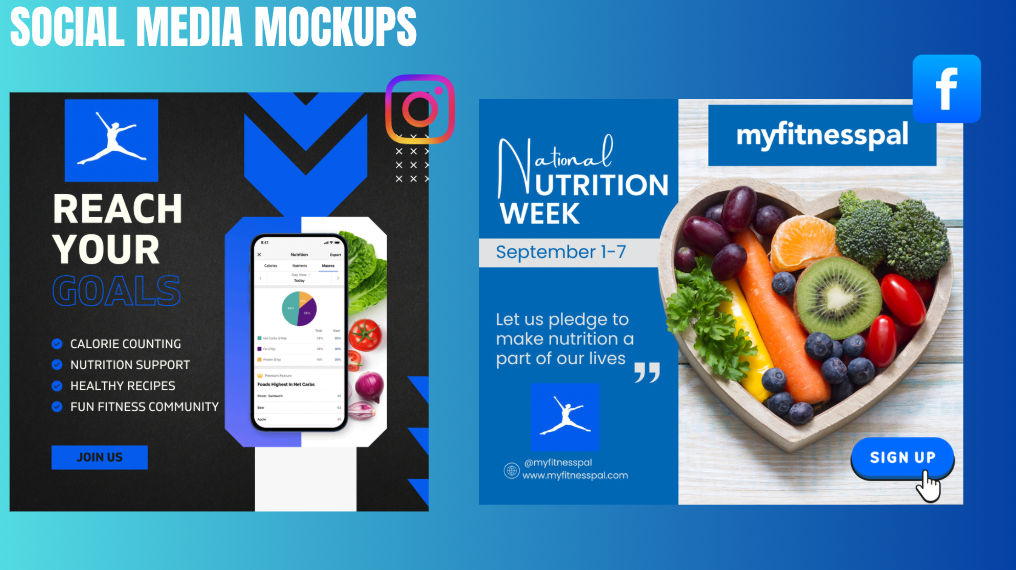
This project evaluates how brand content must adapt across platforms based on audience behavior, discoverability, and format. Developed as part of a broader brand content strategy at Newhouse, these social media mockups reimagine how MyFitnessPal could communicate consistently across consumer touchpoints while remaining flexible to different user needs and contexts.
The work considers how users encounter MyFitnessPal at different stages—new users discovering the brand, active users building habits, and long-term users maintaining routines—and how content design, tone, and structure should shift accordingly. Each mockup reflects platform-specific behavior, visual hierarchy, and messaging priorities while maintaining a cohesive brand system.
This approach works because social content is designed as part of the product experience—supporting discovery, habit-building, and long-term engagement.
Proof of Concept: Innovation in Practice
This video represents a minimum viable product developed as part of my Newhouse capstone—designed to test how a scalable media and community concept could serve an overlooked audience.
While the brand has since evolved into The Professor Collective, this work demonstrates how I identify opportunity, validate ideas, and translate insight into execution.
The concept centers on non-tenure, part-time professors—who now make up over 50% of all college faculty—and explores how targeted content, resources, and community can meet unmet needs within a fragmented system.
Why This Matters in the Real World
Conceptualizing unique service offerings rooted in real user pain points
Identifying untapped audiences often missed by traditional media and institutions
Grounding ideas in research and data, not assumptions
Testing, iterating, and scaling concepts through audience feedback and continued refinement
This project reflects how I approach innovation: defining a problem, validating demand, building a focused MVP, and using content as both a testing ground and a growth engine.